How to Choose a Mini Keg, Home Draft Dispenser or Can Cooler
Picking the right beer storage or draft system comes down to four specifications: how many pints you pour per week, whether your vessel lives inside a fridge or outdoors, CO2 cartridge compatibility, and vertical shelf clearance.
1. Match Vessel Capacity to Your Weekly Pour (12 oz to 1/2 Barrel)
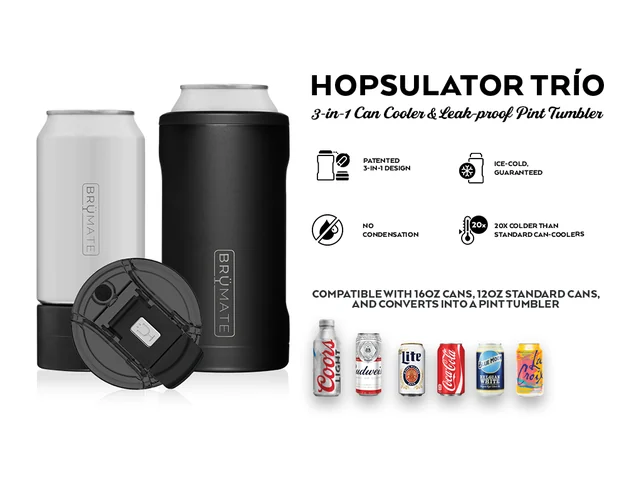
For single cans at a backyard barbecue or tailgate, a double-wall copper-lined can insulator (BrüMate Hopsulator Trio or YETI Colster) keeps 12 oz and 16 oz cans icy to the last sip. For 4 to 8 pints of craft brewery draft or small-batch homebrew, a 64 oz (half-gallon) or 128 oz (1-gallon) CO2-pressurized mini keg keeps beer fresh for 2–3 weeks. For dedicated home bars pouring 40 to 124 pints per keg, a full-size compressor kegerator (EdgeStar KC2000SS) lowers per-pint cost and holds commercial sixth-barrel or half-barrel kegs.
Rule of thumb: If you finish 4–8 pints over two weekends, pick a 64 oz or 128 oz pressurized mini keg; only step up to a full-size kegerator if you finish 5+ gallons within 60 days.
2. Single-Wall Stainless vs. Double-Wall Vacuum Insulation
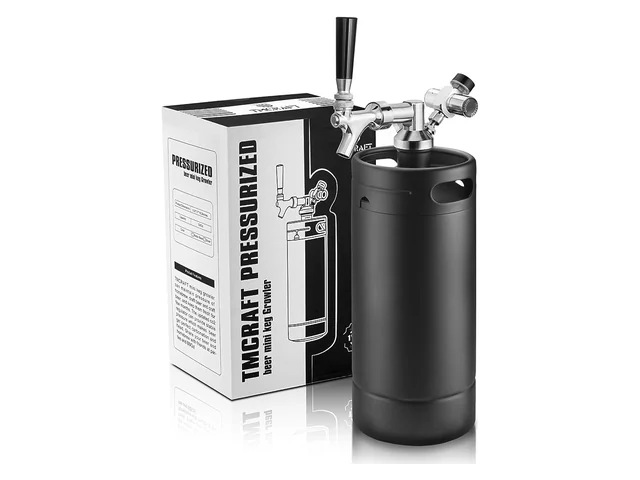
Double-wall vacuum insulation acts as a thermal barrier in both directions: it keeps cold beer cold outside a fridge for 8–24 hours, but it also blocks cold fridge air from chilling warm liquid inside. Single-wall 304 stainless mini kegs (TMCRAFT 128 oz, NutriChef) transfer heat rapidly so you can chill homebrew or force-carbonate inside your fridge.
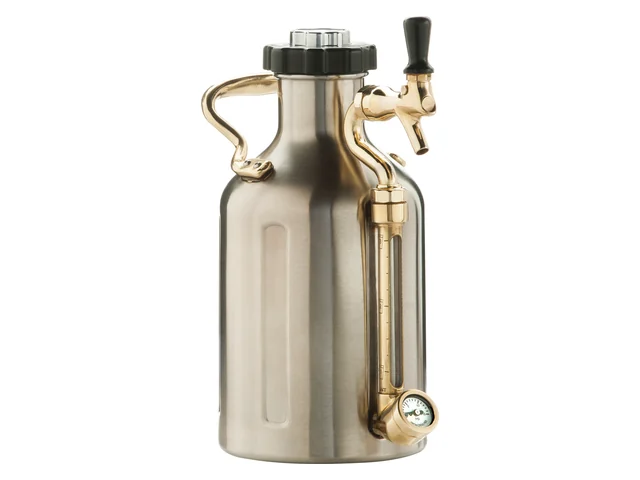
Rule of thumb: Always pre-chill beer before filling a double-wall vacuum uKeg or insulated growler.
3. CO2 Cartridge Threads (3/8"-24 UNF vs. Unthreaded) & Serving PSI
External brass/aluminum mini-keg regulators screw onto 3/8"-24 UNF threaded 16g food-grade CO2 cartridges. GrowlerWerks uKeg VPR caps enclose unthreaded 8g or 16g chargers inside an internal sleeve. When dispensing already-carbonated craft beer, start at 5–8 PSI; only raise pressure to 12–15 PSI for highly carbonated styles.
Rule of thumb: Never use oiled airgun CO2 cartridges in a beer dispenser—always verify food-grade beverage CO2.
3 benchmark picks
Ready to pick?
Questions
How long does beer stay fresh and carbonated in a pressurized mini keg?
Unlike a standard glass jug growler—which loses carbonation within 24 to 36 hours after opening—a CO2-pressurized stainless mini keg (like the TMCRAFT 128 oz or GrowlerWerks uKeg) maintains positive CO2 headspace pressure and keeps oxygen out, preserving fresh draft carbonation for 2 to 3 weeks when refrigerated.
How many 16g CO2 cartridges do I need for a 64 oz or 128 oz mini keg?
A single 16-gram food-grade CO2 cartridge easily dispenses one full 128 oz (1-gallon / 8-pint) mini keg at normal serving pressure (6–12 PSI). Note the thread standard before buying cartridges: TMCRAFT and NutriChef regulators take 3/8"-24 UNF threaded 16g cartridges, whereas GrowlerWerks uKeg caps use non-threaded 8g (uKeg 64) or 16g (uKeg 128) chargers.
Should I buy a single-wall mini keg or a double-wall vacuum-insulated mini keg?
Choose a single-wall 304 stainless mini keg (TMCRAFT 128 oz, NutriChef 64/128 oz) if you store the keg inside a refrigerator or ice chest—single-wall steel chills liquid inside a fridge much faster than vacuum walls. Choose a double-wall vacuum-insulated keg (GrowlerWerks uKeg 64/128 or TMCRAFT Vacuum Growler) if you pour pre-chilled beer on a counter, patio, boat, or tailgate.
Why is my mini keg or kegerator pouring mostly foam?
Foamy pours come from three main culprits: 1) Warm beer or a warm faucet (always chill the filled keg below 40°F for at least 4 hours before tapping), 2) Excess regulator pressure (dial mini-keg regulators down to 5–8 PSI for dispensing rather than 15+ PSI), or 3) Partially opening the tap handle (always snap the faucet 100% open to avoid turbulence).